
Every light you see...
A Visual Essay
THE SILICON REVOLUTION
How a Tiny Switch Changed Everything
From a 1947 laboratory curiosity to the foundation of modern civilization— the story of the transistor, the visionaries who built an industry, and why these tiny switches now shape the fate of nations.
The Invention
In the winter of 1947, inside a cramped laboratory at Bell Labs in Murray Hill, New Jersey, two physicists did something that would reshape human civilization. John Bardeen and Walter Brattain, working under the direction of William Shockley, demonstrated a device that could amplify an electrical signal using a solid piece of material—no vacuum tube required.
They called it a transistor. It was ugly, unreliable, and almost no one outside the lab understood what it meant. Within two decades, it would make vacuum tubes obsolete. Within five decades, billions of transistors would fit on a chip smaller than a fingernail.


John Bardeen
The Quiet Theorist
- Co-invented the point-contact transistor at Bell Labs
- Only person to win two Nobel Prizes in Physics
- Provided theoretical framework for semiconductor behavior
"Science is a field which grows continuously with ever expanding frontiers."— Nobel acceptance speech, 1956
Left Bell Labs partly due to friction with Shockley
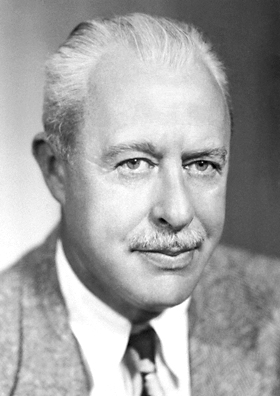
Walter Brattain
The Experimentalist
- Built the first working point-contact transistor
- Experimental physicist who made theory real
- Shared 1956 Nobel Prize with Bardeen and Shockley
"I knew the transistor was important, but I had no idea it would lead to all this."— Bell Labs oral history

William Shockley
The Brilliant Tyrant
- Invented the junction transistor (1951)
- Founded Shockley Semiconductor in Palo Alto
- Inadvertently created Silicon Valley through his toxicity
"If you take a bale of hay and tie it to the tail of a mule and then strike a match and set the bale of hay on fire, and if you then compare the energy expended shortly thereafter by the mule with the energy expended by yourself in the striking of the match, you will understand the concept of amplification."— Attributed, various interviews
His management style drove the Traitorous Eight to leave
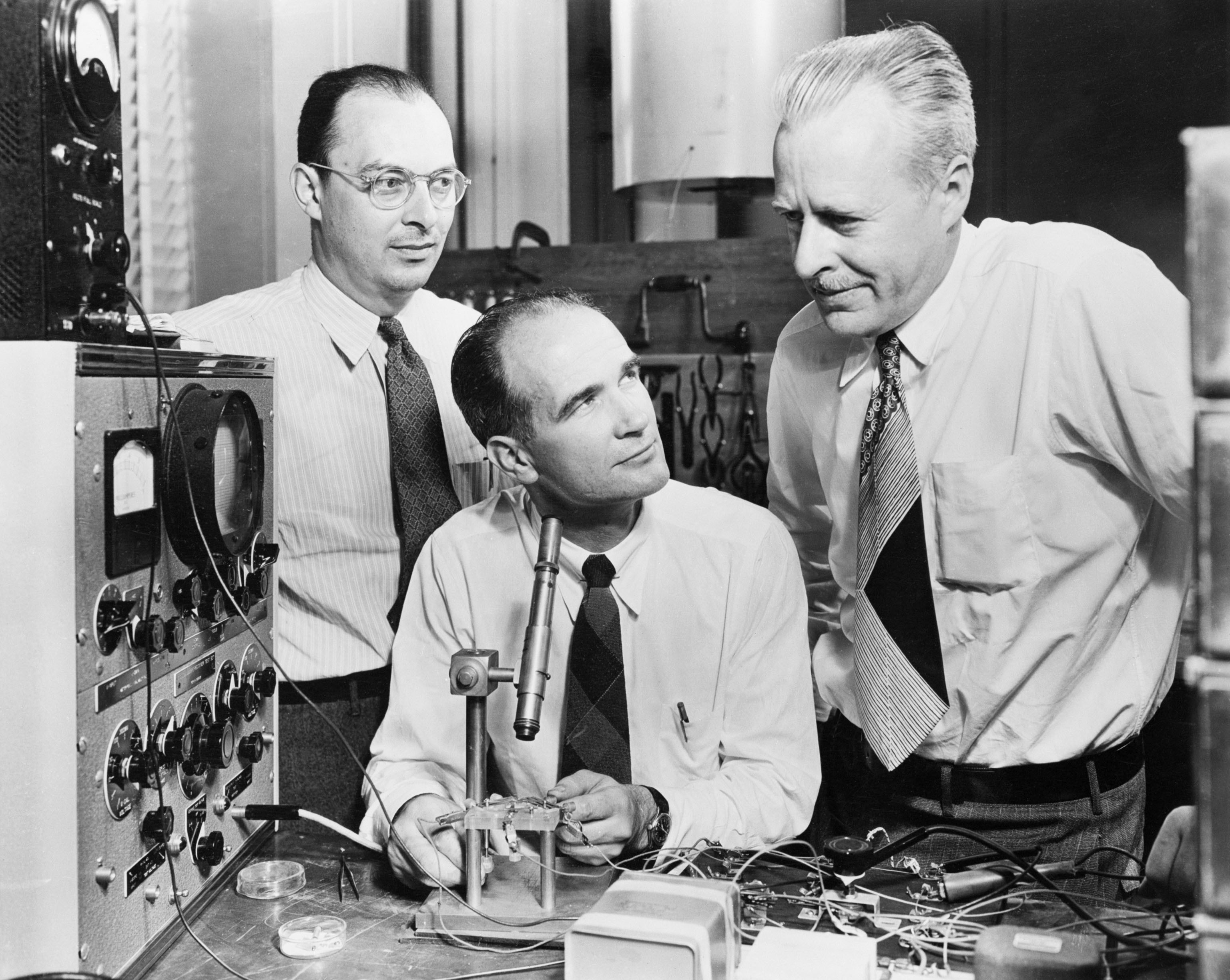
The transistor solved a problem that had plagued electronics since its birth: vacuum tubes were hot, fragile, power-hungry, and unreliable. A computer built from vacuum tubes filled a room and required constant maintenance. The transistor promised something different—a switch with no moving parts, no heated filament, no glass envelope waiting to crack.
But the transistor almost didn't happen. The team's leader, William Shockley, was brilliant and impossible. His theoretical insights guided the work, but his abrasive personality drove talent away. When Shockley later founded his own company in California, his management style would trigger an exodus—eight engineers leaving at once, an act so shocking it earned them a name: the Traitorous Eight.
That betrayal would create Silicon Valley.
How It Works
A transistor is, at its core, a controllable switch. Apply a small voltage to one terminal (the gate), and you control whether current can flow between the other two terminals (source and drain). Think of it like a dam: a small amount of energy controls a much larger flow.
A MOSFET has three terminals: Source, Gate, and Drain
No voltage on the gate = no channel forms = no current flows
Apply voltage to gate = channel forms = electrons can flow
This on/off behavior happens billions of times per second
Modern chips have billions of these switches, each just nanometers across
Modern computers work in binary—ones and zeros—because transistors are fundamentally binary devices. On or off. Current flows or it doesn't. By combining billions of these simple switches in precise arrangements, we can perform any computation.
The magic isn't in any single transistor. It's in how many you can fit in a given space, and how fast you can switch them. This is why the semiconductor industry has spent seventy years making transistors smaller. Smaller transistors switch faster, use less power, and cost less per unit. The relentless drive toward miniaturization isn't about elegance—it's about physics.
The Traitorous Eight
In 1957, eight young engineers did something nearly unthinkable: they quit their jobs at Shockley Semiconductor Laboratory, all on the same day, to found a competing company. Their boss, William Shockley—Nobel laureate, transistor co-inventor—called them traitors. The name stuck.
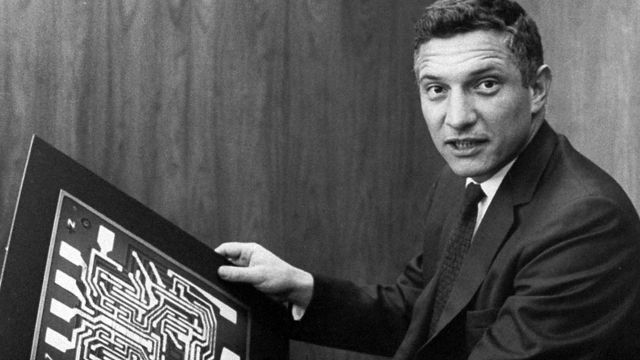
Robert Noyce
The Mayor of Silicon Valley
- Co-invented the planar integrated circuit
- Co-founded Fairchild Semiconductor (1957)
- Co-founded Intel with Gordon Moore (1968)
"Don't be encumbered by history. Go off and do something wonderful."— Widely attributed
The charismatic leader who gave Silicon Valley its culture

Gordon Moore
The Prophet of Progress
- Articulated Moore's Law (1965)
- Co-founded Intel with Robert Noyce
- Guided industry roadmap for 50 years
"The complexity for minimum component costs has increased at a rate of roughly a factor of two per year."— Electronics Magazine, April 19, 1965
His observation became a self-fulfilling prophecy
Jack Kilby
The Other Inventor
- Invented the integrated circuit at Texas Instruments (1958)
- Demonstrated first working IC on September 12, 1958
- Won Nobel Prize in Physics (2000)
"What we didn't realize then was that the integrated circuit would reduce the cost of electronic functions by a factor of a million to one."— Nobel Lecture, December 2000
Noyce and Kilby share credit for the IC; Kilby outlived Noyce to receive the Nobel
The Traitorous Eight founded Fairchild Semiconductor, and from that company would spring Intel, AMD, and dozens of others. Silicon Valley wasn't named for a geographic feature—it was named for the material these companies worked with. The valley's entire identity traces back to eight people who couldn't work for a difficult genius.
In 1965, Gordon Moore observed something remarkable. Plotting the number of transistors on a chip over time, he noticed they were roughly doubling every year (later revised to every two years). He published this observation in Electronics Magazine. It became known as Moore's Law—not a physical law, but a self-fulfilling prophecy that guided the industry for half a century.
Moore's Law: Transistor Count (1971–2023)
From 2,300 transistors to 80 billion — a 35-million-fold increase in 52 years
Source: Intel, Apple, NVIDIA product specifications
The Microprocessor Moment
In 1968, Robert Noyce and Gordon Moore left Fairchild to start a new company. They called it Intel—a contraction of "integrated electronics." Their initial focus was memory chips, but a Japanese calculator company's request would change everything.
Busicom wanted a set of chips for a new calculator. Ted Hoff, an Intel engineer, proposed a radical alternative: instead of building custom chips for each function, why not build a single chip that could be programmed to do anything? A general-purpose processor. A computer on a chip.
Ted Hoff
The Microprocessor Architect
- Conceived single-chip CPU architecture
- Led development of Intel 4004 (1971)
- Invented the microprocessor concept
"We put together a small computer—all on one chip."— Intel oral history
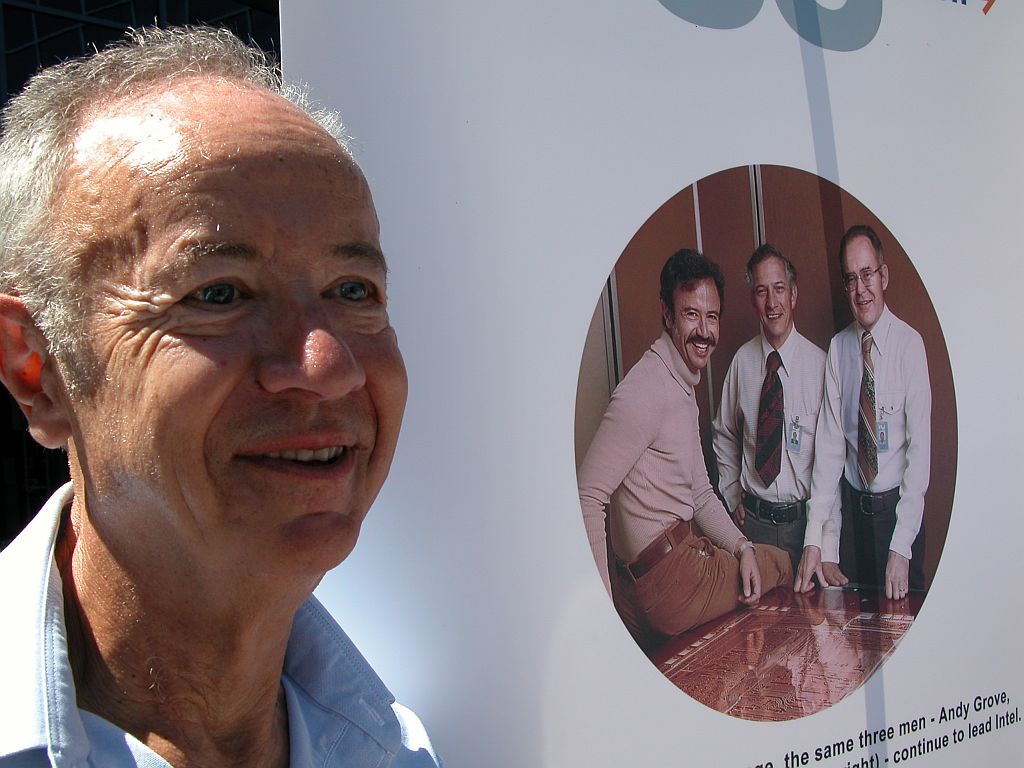
Andy Grove
The Paranoid Survivor
- Built Intel's operational excellence as CEO
- Drove the pivot from memory to microprocessors
- Created 'Intel Inside' marketing phenomenon
"Only the paranoid survive."— Book title, 1996
Escaped Hungary during the 1956 uprising; built Intel into a powerhouse
The Intel 4004, released in November 1971, was the world's first commercial microprocessor. It had 2,300 transistors and ran at 740 kHz. Today's processors have billions of transistors and run thousands of times faster. But the 4004 established the template: a programmable chip that could execute stored instructions.
Intel's success wasn't guaranteed. The company nearly died in the memory business when Japanese competitors undercut them on price. Andy Grove, Intel's CEO, made a brutal decision: abandon memory and bet everything on microprocessors. It was the right call. When IBM chose Intel's 8088 chip for the first IBM PC in 1981, Intel became the engine of the personal computer revolution.
The Foundry Revolution
For decades, the semiconductor industry operated on a simple model: if you designed chips, you also manufactured them. Companies like Intel, Texas Instruments, and Motorola ran their own fabrication plants—"fabs"—at enormous cost. Building a new fab required billions of dollars and years of construction.
Morris Chang saw a different model. What if a company only manufactured chips—no designs of its own? A "pure-play foundry" that would fabricate other companies' designs. This would allow small companies to create chips without building billion-dollar factories.

Morris Chang
The Foundry Father
- Founded TSMC in 1987
- Invented the pure-play foundry business model
- Enabled the fabless semiconductor industry
"I didn't start TSMC to compete with Intel. I started it to enable a whole new industry."— Business interviews
Born in China, MIT/Stanford educated, TI veteran; founded TSMC at age 55

In 1987, Chang founded Taiwan Semiconductor Manufacturing Company (TSMC). The industry was skeptical. Who would trust their most valuable intellectual property to an outside manufacturer? But Chang's insight was correct. The foundry model enabled an explosion of "fabless" chip companies: Qualcomm, NVIDIA, AMD (which later spun off its fabs), and eventually Apple.
Global Semiconductor Manufacturing Share (2024)
Source: Semiconductor Industry Association, TrendForce
Today, TSMC manufactures chips for nearly every major technology company. It produces 92% of the world's most advanced semiconductors. A single company in Taiwan, on an island 100 miles from China, has become indispensable to global technology.
The Shrinking Race
Making transistors smaller isn't just about cramming more onto a chip. Smaller transistors switch faster and use less power. The economics are compelling: twice as many transistors per square millimeter means roughly half the cost per transistor. The industry has spent trillions of dollars chasing this scaling.
But physics pushes back. To print ever-smaller features onto silicon, you need shorter wavelengths of light. The industry used 193-nanometer deep ultraviolet (DUV) light for decades, pushing it far beyond its natural limits through clever tricks. Eventually, those tricks weren't enough.
The answer was extreme ultraviolet (EUV) lithography—light with a wavelength of just 13.5 nanometers. EUV light is absorbed by air, so the machines operate in a vacuum. It's absorbed by glass, so mirrors replace lenses. The light source? Tiny droplets of tin vaporized by a powerful laser, 50,000 times per second.
EUV Lithography: The Impossible Machine
Tiny droplets of molten tin fall through a vacuum chamber
A powerful CO₂ laser vaporizes each droplet into plasma — 50,000 times per second
The plasma emits 13.5nm extreme ultraviolet light
EUV is absorbed by glass, so 11 ultra-precise mirrors guide the light to the wafer

Peter Wennink
The Lightsmith
- Led ASML as CEO during EUV commercialization
- Built the world's only EUV lithography company
- Made ASML indispensable to advanced chipmaking
"There is no alternative to EUV if you want to continue Moore's Law."— Industry interviews
Retired 2024 after making ASML a $300B company
Only one company on Earth can build EUV machines: ASML, based in the Netherlands. Without ASML, there are no leading-edge chips. Without leading-edge chips, there is no advanced AI, no cutting-edge smartphones, no modern data centers. A single company in a small European country has become a critical node in the global technology supply chain.
The Geopolitical Chip
In 2020, the COVID-19 pandemic disrupted global supply chains. Car factories shut down because they couldn't get chips. Game console launches were delayed. The chip shortage made visible what had been invisible: modern civilization runs on semiconductors, and the supply is fragile.
The numbers are stark. Taiwan produces 22% of the world's semiconductors and 92% of the most advanced ones. Taiwan is an island 100 miles from mainland China. The Taiwan Strait is now one of the most strategically significant bodies of water on Earth.
The Geography of Chipmaking
The US produces 37% of global chips
Japan reaches 27%, but Taiwan emerges at 22%
Manufacturing shifts across the Pacific
TSMC becomes indispensable
92% of advanced chips from one island
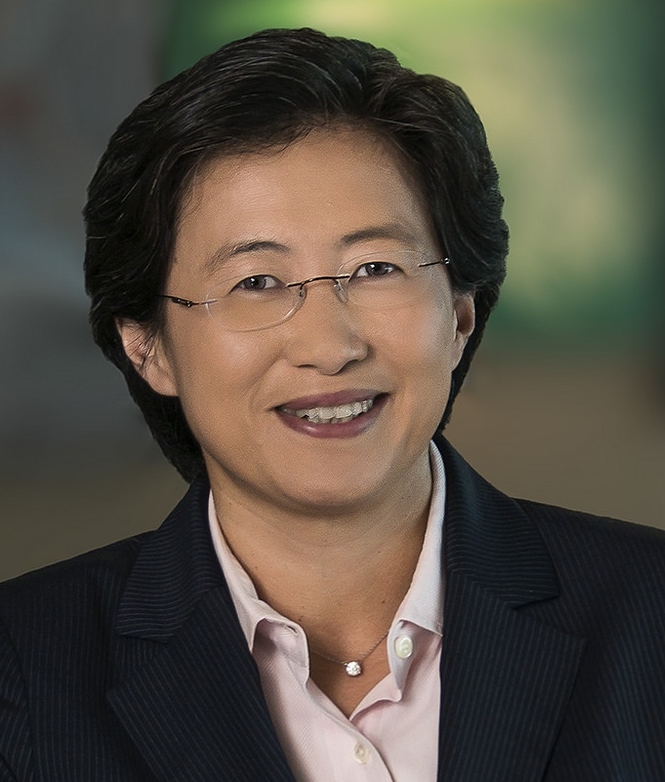
Lisa Su
The Turnaround Artist
- Revived AMD from near-bankruptcy as CEO
- Led development of Zen architecture
- Made AMD competitive with Intel again
"You have to set very high goals. And you have to be willing to put in the work every single day to meet those goals."— Various interviews

Jensen Huang
The AI Kingmaker
- Co-founded NVIDIA (1993)
- Pivoted from gaming GPUs to AI compute
- Built CUDA platform for parallel computing
"Software is eating the world, but AI is going to eat software."— Conference appearances
Made NVIDIA the most valuable semiconductor company
The United States, once the world's leading chip manufacturer, now produces only about 10% of global supply. In August 2022, President Biden signed the CHIPS and Science Act, committing $52 billion to domestic semiconductor manufacturing. Intel, TSMC, and Samsung are building new fabs on American soil.
Meanwhile, the United States has imposed export controls on advanced semiconductor technology to China. ASML cannot sell its EUV machines to Chinese companies. The goal is to slow China's advancement in AI and military technology. Chips have become instruments of geopolitical competition.
"Geopolitics is real. Technology is not just technology anymore."— Morris Chang, 2022
What Comes Next
Moore's Law is slowing. Transistors are now measured in nanometers—a few dozen atoms across. Quantum effects that were once negligible now cause problems. Each new process node costs more than the last to develop. Fewer companies can afford to stay at the leading edge.
But the demand for computing power has never been higher. Training a large AI model like GPT-4 requires months of computation on thousands of chips. The AI revolution is driving unprecedented demand for semiconductors—and unprecedented concentration of power among the companies that can supply them.
The industry is adapting. Instead of making transistors smaller, engineers are stacking chips in three dimensions. They're using "chiplets"—small modular pieces that can be combined like building blocks. They're developing new materials and new transistor architectures. The end of Moore's Law doesn't mean the end of progress—it means progress takes new forms.
The next transistor revolution won't be about making things smaller. It will be about making things smarter—and deciding who controls that intelligence.
Key Moments
77 years of semiconductor history
The First Transistor
Bardeen and Brattain demonstrate the point-contact transistor at Bell Labs
Silicon Wins
Texas Instruments produces the first silicon transistor
The Traitorous Eight
Eight engineers leave Shockley to found Fairchild Semiconductor
The Integrated Circuit
Jack Kilby demonstrates the first IC at Texas Instruments
The Planar Process
Robert Noyce patents the planar integrated circuit at Fairchild
Moore's Law
Gordon Moore observes transistor doubling in Electronics Magazine
Intel Founded
Noyce and Moore leave Fairchild to start Intel
The Microprocessor
Intel releases the 4004—a computer on a chip
The IBM PC
IBM chooses Intel's 8088 for the first IBM PC
Intel's Pivot
Andy Grove exits memory business, bets on microprocessors
The Foundry Model
Morris Chang founds TSMC in Taiwan
Intel Inside
Intel launches consumer marketing campaign
Apple's Switch
Apple announces transition from PowerPC to Intel
TSMC Leads
TSMC surpasses Intel in manufacturing technology
EUV Production
TSMC begins volume production with EUV lithography
The Chip Shortage
COVID exposes semiconductor supply chain fragility
Apple Silicon
Apple announces M1 chip, leaves Intel
The CHIPS Act
US commits $52 billion to domestic semiconductor manufacturing
AI Explosion
ChatGPT drives unprecedented demand for AI chips
Sources & Further Reading
Books
- Leslie Berlin, The Man Behind the Microchip: Robert Noyce and the Invention of Silicon Valley (Oxford, 2005)
- Andrew Grove, Only the Paranoid Survive (Currency Doubleday, 1996)
- Chris Miller, Chip War: The Fight for the World's Most Critical Technology (Scribner, 2022)
Primary Sources
- Gordon Moore, "Cramming More Components onto Integrated Circuits," Electronics Magazine, April 19, 1965
- Nobel Prize Archives: Shockley, Bardeen, Brattain (1956); Jack Kilby (2000)
- U.S. Congress, CHIPS and Science Act of 2022
Data Sources
- Semiconductor Industry Association (SIA), Industry Statistics
- TrendForce, IC Insights, Foundry Market Reports
- Intel, Apple, NVIDIA, TSMC, ASML — Corporate Filings and Press Releases
Archives & Oral Histories
- Computer History Museum, Oral Histories Collection
- IEEE History Center
- Bell Labs Archives (via Nokia)