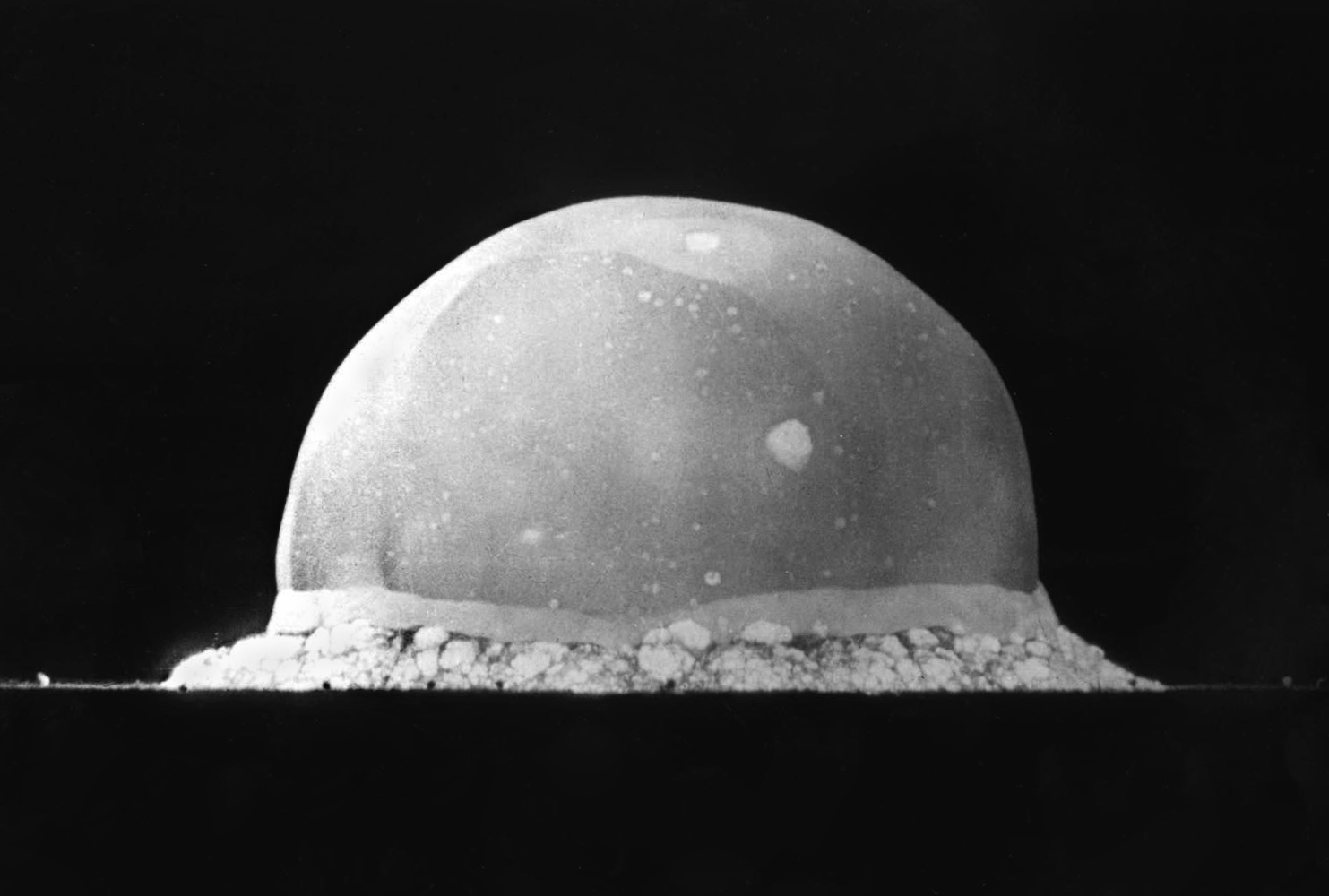
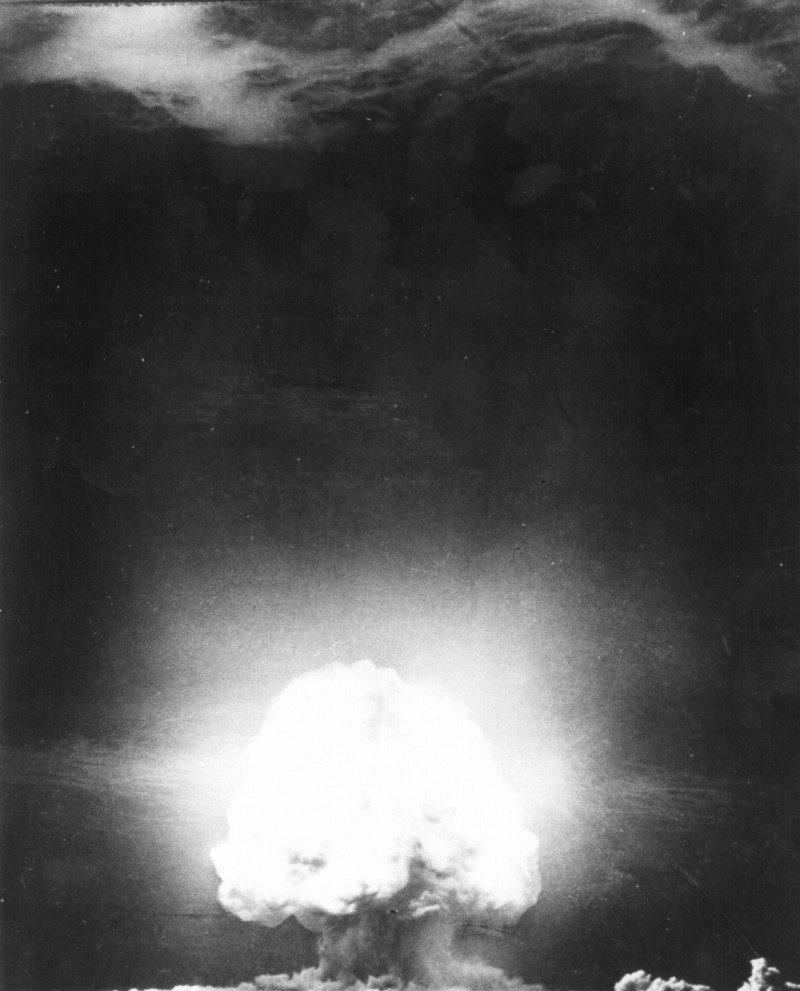

Now I am become Death, the destroyer of worlds.
— Bhagavad Gita, recalled by Oppenheimer
THE MANHATTAN PROJECT
The Scientists, The Secret, The Bomb That Ended One War and Started Another
The Letter That Started It All
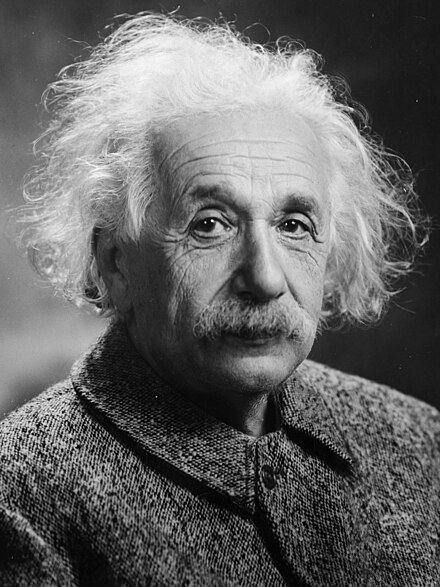
Leo Szilard, a Hungarian physicist haunted by visions of chain reactions, convinced Albert Einstein to sign a letter to President Franklin D. Roosevelt. Germany had stopped selling uranium from occupied Czech mines. The Nazis might be building a bomb. America could not afford to lose this race.
Albert Einstein — The Reluctant Catalyst
- Signed the letter that launched the project
- Never worked on the bomb itself (denied security clearance)
- Later called signing “the one great mistake in my life”
Einstein-Szilard Letter to President Roosevelt
Sir,
Some recent work by E. Fermi and L. Szilard, which has been
communicated to me in manuscript, leads me to expect that the
element uranium may be turned into a new and important source
of energy in the immediate future.
This new phenomenon would also lead to the construction of bombs,
and it is conceivable—though much less certain—that extremely
powerful bombs of a new type may thus be constructed.
A single bomb of this type, carried by boat and exploded in a port,
might very well destroy the whole port together with some of
the surrounding territory.
Roosevelt's response: He created the Advisory Committee on Uranium. The first domino fell.
Chain Reaction
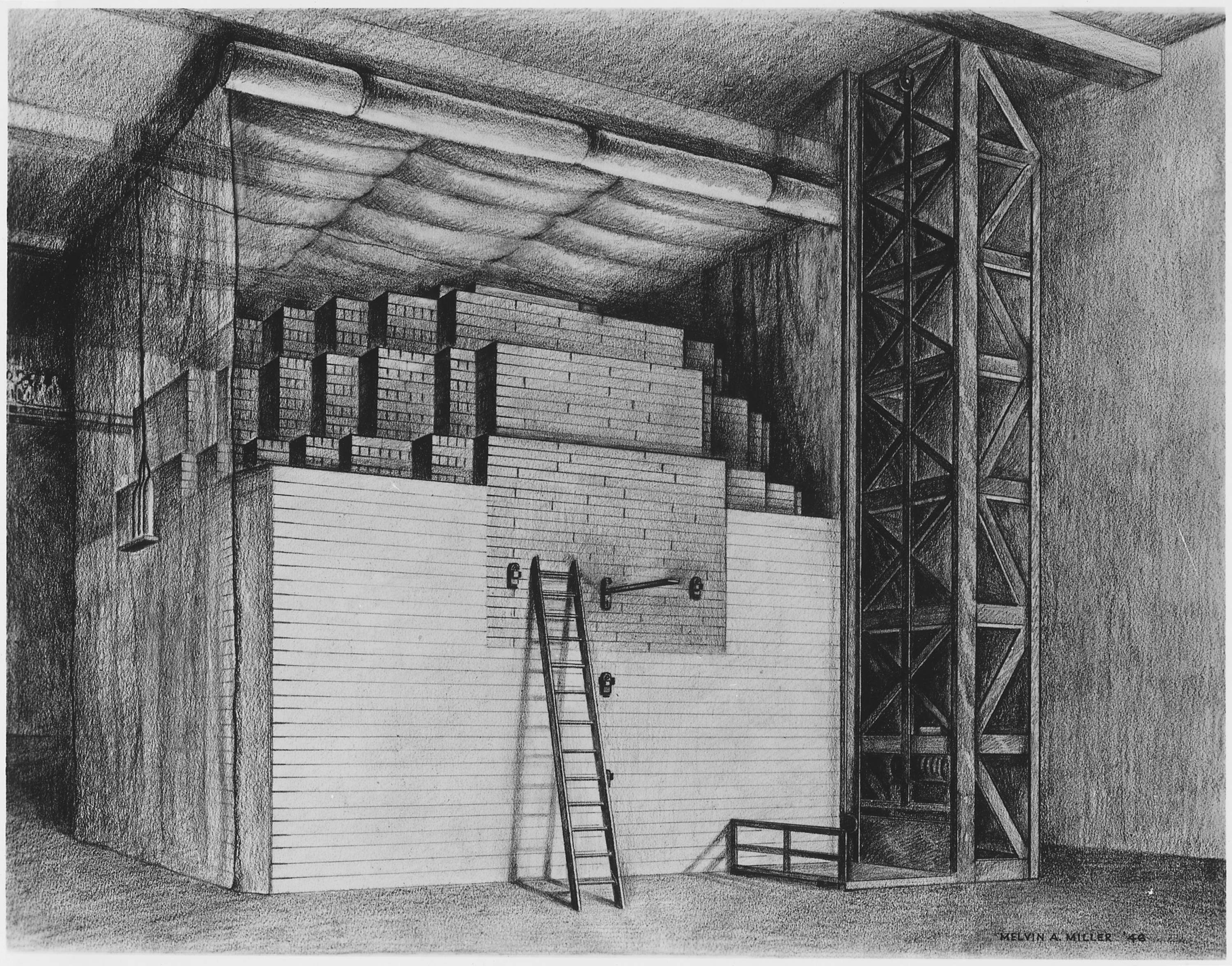
Beneath the abandoned football stadium at the University of Chicago, Enrico Fermi and his team stacked 40,000 graphite blocks interspersed with uranium. They called it Chicago Pile-1.
For 28 minutes, humanity sustained a controlled chain reaction. Then Fermi ordered shutdown. Arthur Compton called James Conant with the coded message:
“The Italian navigator has just landed in the new world.”
— Arthur Compton to James Conant
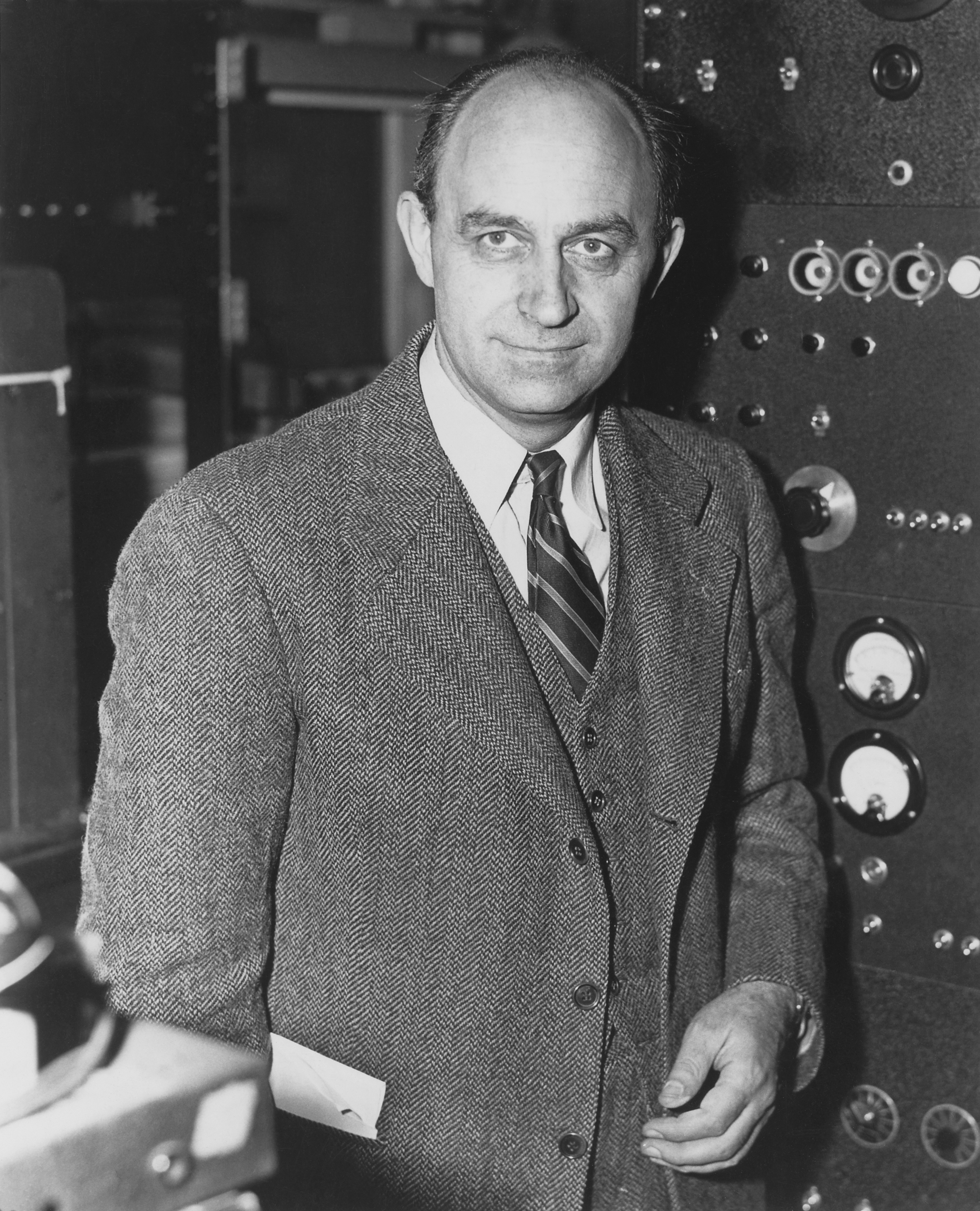
Enrico Fermi — The Architect of the Atom
- Italian refugee who fled Mussolini's racial laws
- Built the first nuclear reactor
- Known for preternatural calmness—calculated survival odds during Trinity test
The Secret City
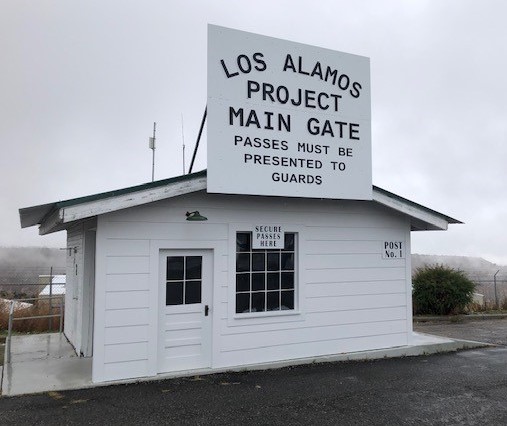
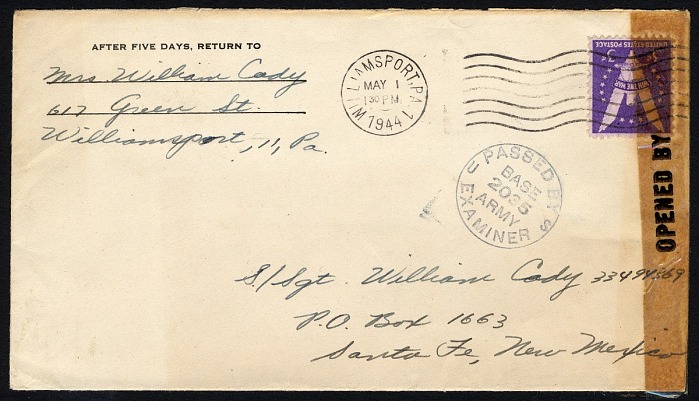
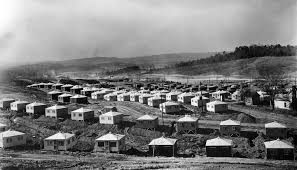
General Leslie Groves selected a remote boys' school on a New Mexico mesa. Within months, it became a secret city of 6,000—the greatest concentration of scientific genius ever assembled.

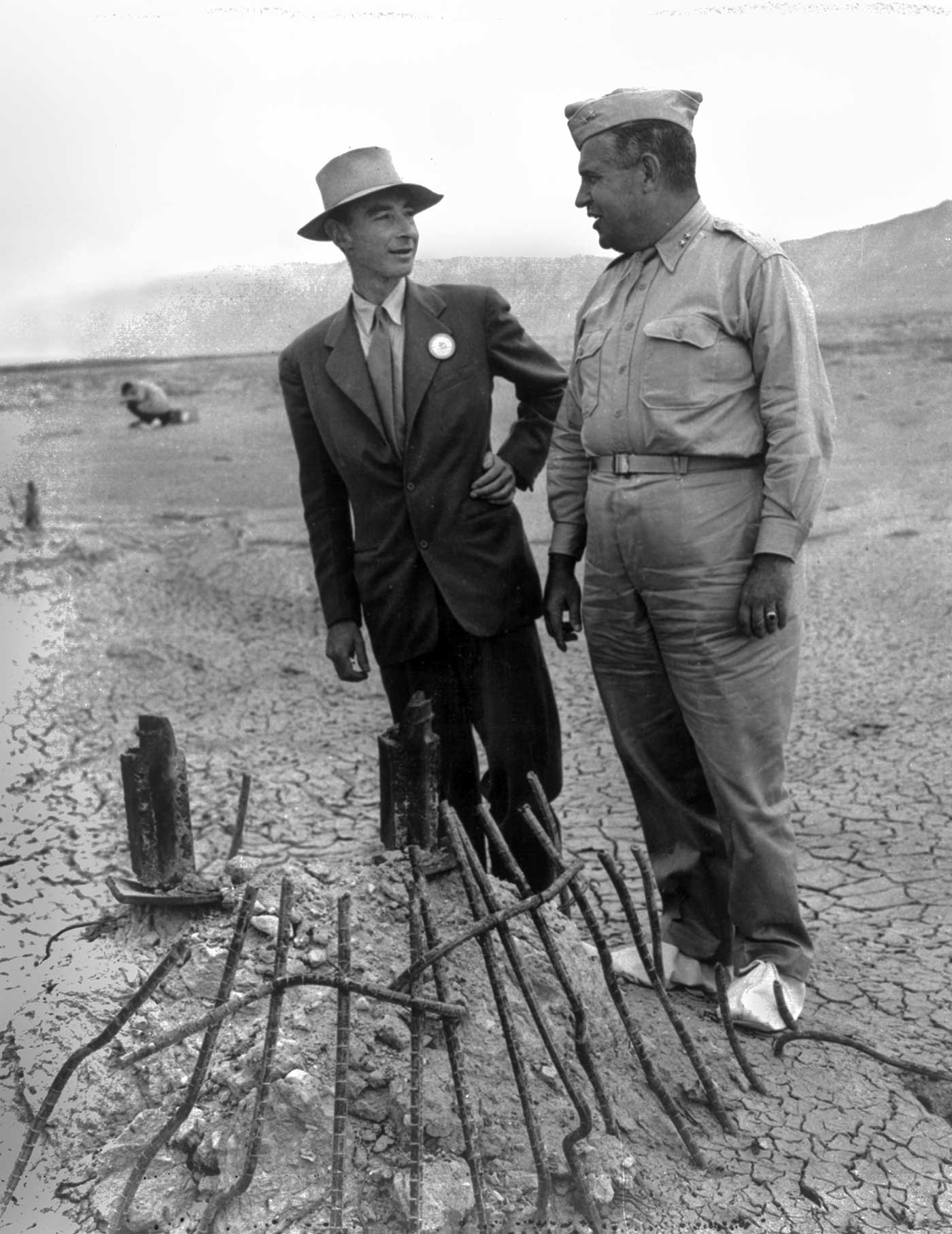
J. Robert Oppenheimer
The Haunted Prometheus- Theoretical physicist, poet, linguist
- Appointed scientific director at age 38
- Read the Bhagavad Gita in Sanskrit
- Would later be destroyed by the government he served

General Leslie Groves
The Man Who Built the Impossible- Army engineer who built the Pentagon
- Managed 125,000 workers, billions of dollars, in total secrecy
- Chose Oppenheimer despite security concerns
The Minds Behind the Monster
They came from across Europe, refugees from fascism now building the ultimate weapon to defeat it. They came from American universities, abandoning tenure for secrecy. Many were in their twenties. They argued about physics during the day and played poker at night. They knew they were making something terrible. They made it anyway.
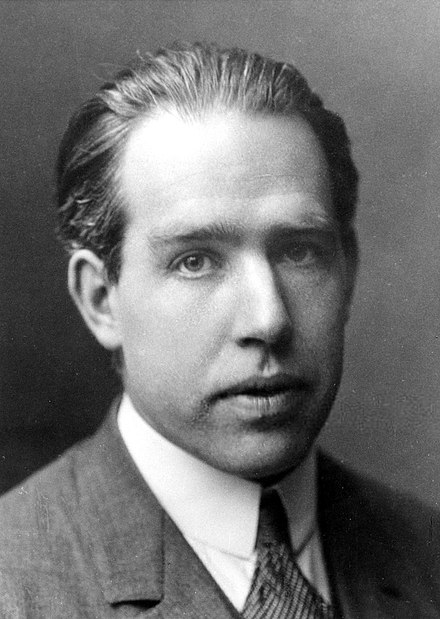
Niels Bohr
The Father Figure“We are in a completely new situation that cannot be resolved by war.”
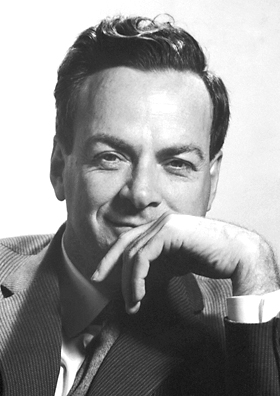
Richard Feynman
The Irreverent GeniusAge 24“I learned to type with one hand so I could hold my wife's letters with the other.”
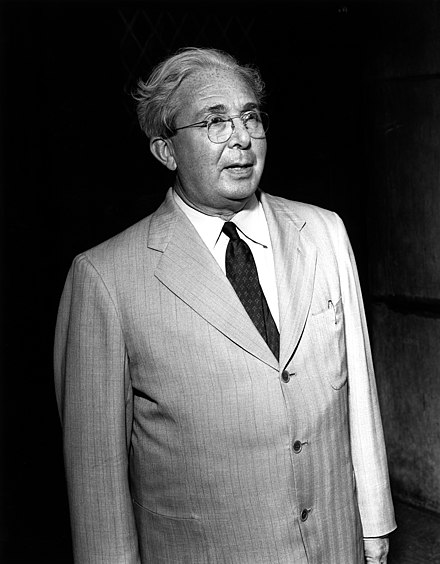
Leo Szilard
The Conscience“We turned the switch, saw the flashes, watched for ten minutes, then switched everything off and went home.”

Edward Teller
The Hawk“The main purpose of the H-bomb is to maintain peace.”

Hans Bethe
The Calculator“If we fight a war and win it with H-bombs, what history will remember is not the ideals we were fighting for.”
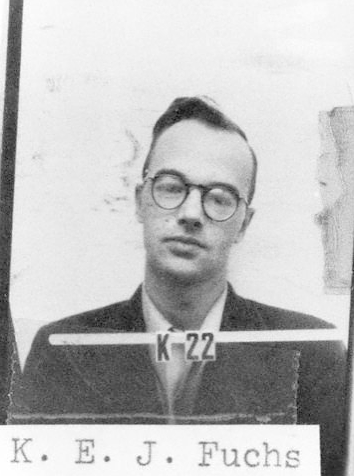
Klaus Fuchs
The Spy“I had complete confidence in Russian policy.”
The Gadget
Two paths to the bomb. The uranium bomb (“Little Boy”) was a simple gun-type design—fire one piece of uranium into another. They were so confident it would work, they never tested it.
The plutonium bomb was different. Plutonium couldn't use gun-type assembly. It required implosion—explosives arranged with perfect symmetry to compress a plutonium core to critical density in microseconds.
The Implosion Problem
The explosive lenses had to be machined to tolerances previously thought impossible. If the symmetry was even slightly off, the bomb would fizzle.
They called the plutonium device “The Gadget.” It would be tested first.


Trinity
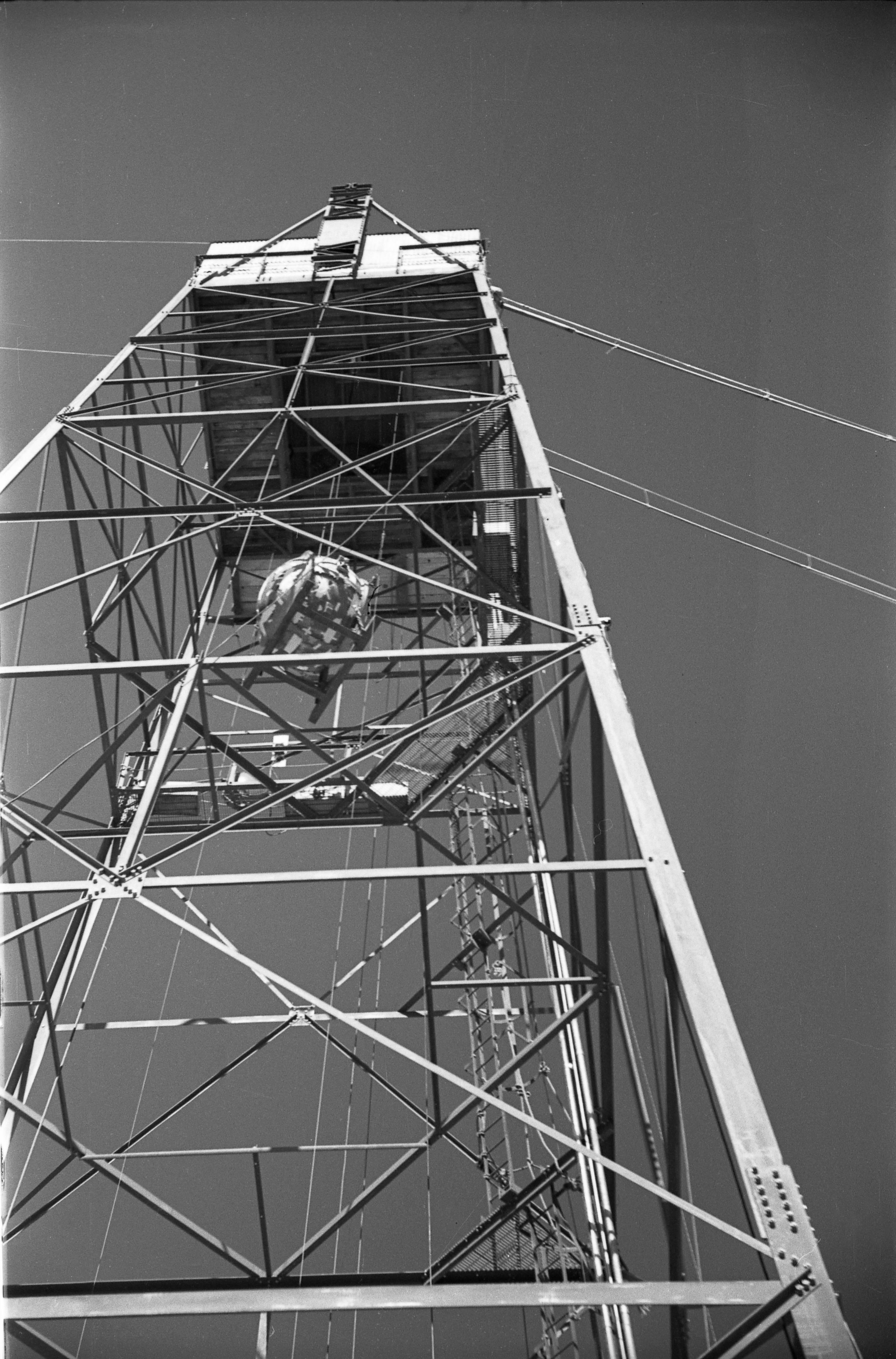
 0.006s0.016s
 0.025s
Millisecond by millisecond, humanity witnessed its new power.

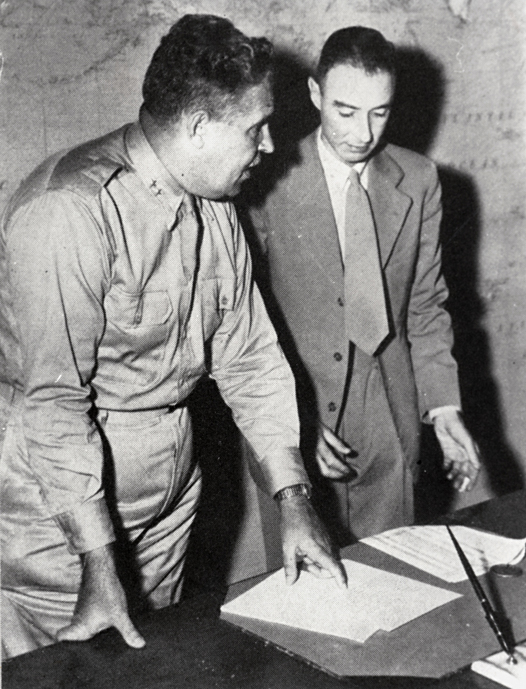 Oppenheimer and Groves at Ground Zero
 Trinitite — desert sand fused to glass
“Now we are all sons of bitches.”
— Kenneth Bainbridge, Trinity Test Director
The Decision
Germany had surrendered in May. The bomb had been built to defeat Hitler, but Hitler was dead. Now it would be used against Japan.
The Target Committee
They selected cities that had been spared conventional bombing—they needed undamaged targets to measure the bomb's effects.

Harry S. Truman
The Man Who Gave the Order- Became president 82 days before Trinity
- Learned of the bomb's existence only after taking office
- Wrote in his diary: “the most terrible thing ever discovered”
- Authorized its use without apparent hesitation
Some scientists petitioned against using it on civilians. Their petition never reached Truman.
Little Boy
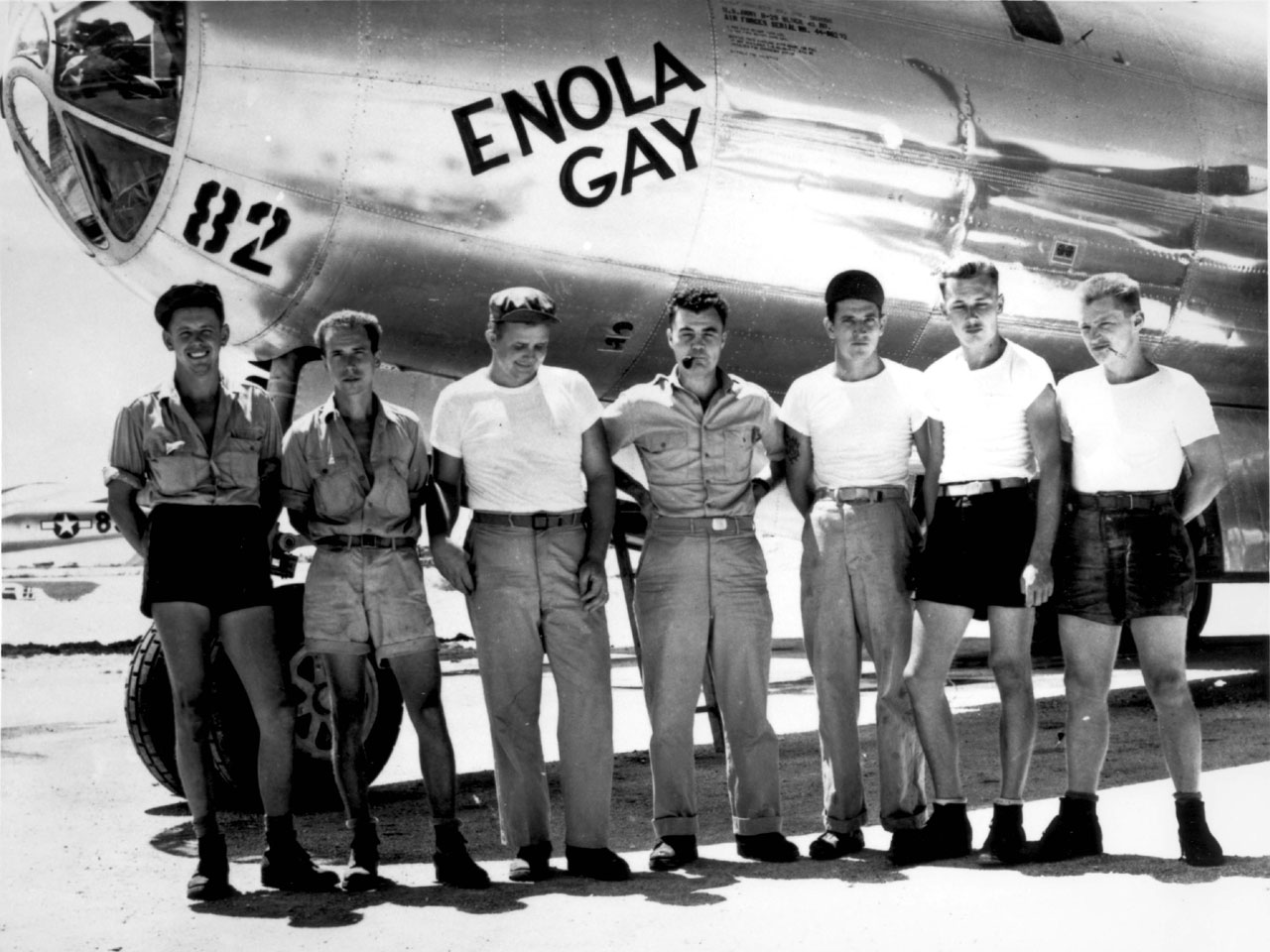

 BEFORE
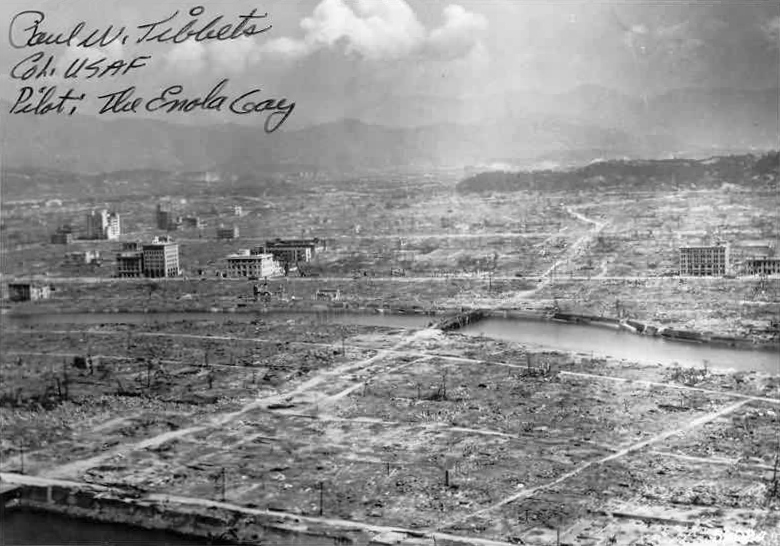 AFTER
AFTER
Fat Man
The primary target was Kokura. But clouds obscured the city. After three failed bombing runs and low fuel, pilot Charles Sweeney diverted to the secondary target: Nagasaki.

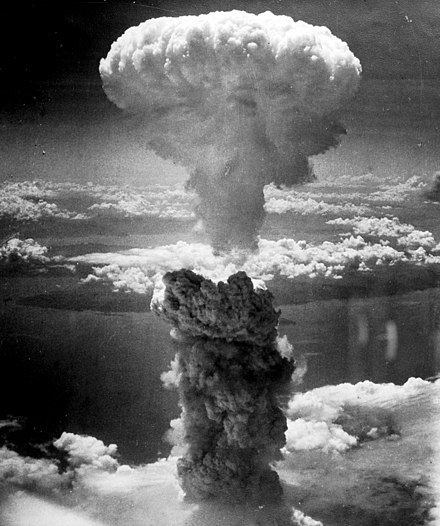
The bomb missed its aim point by nearly two miles. The hills of Nagasaki contained the blast, limiting damage compared to Hiroshima.
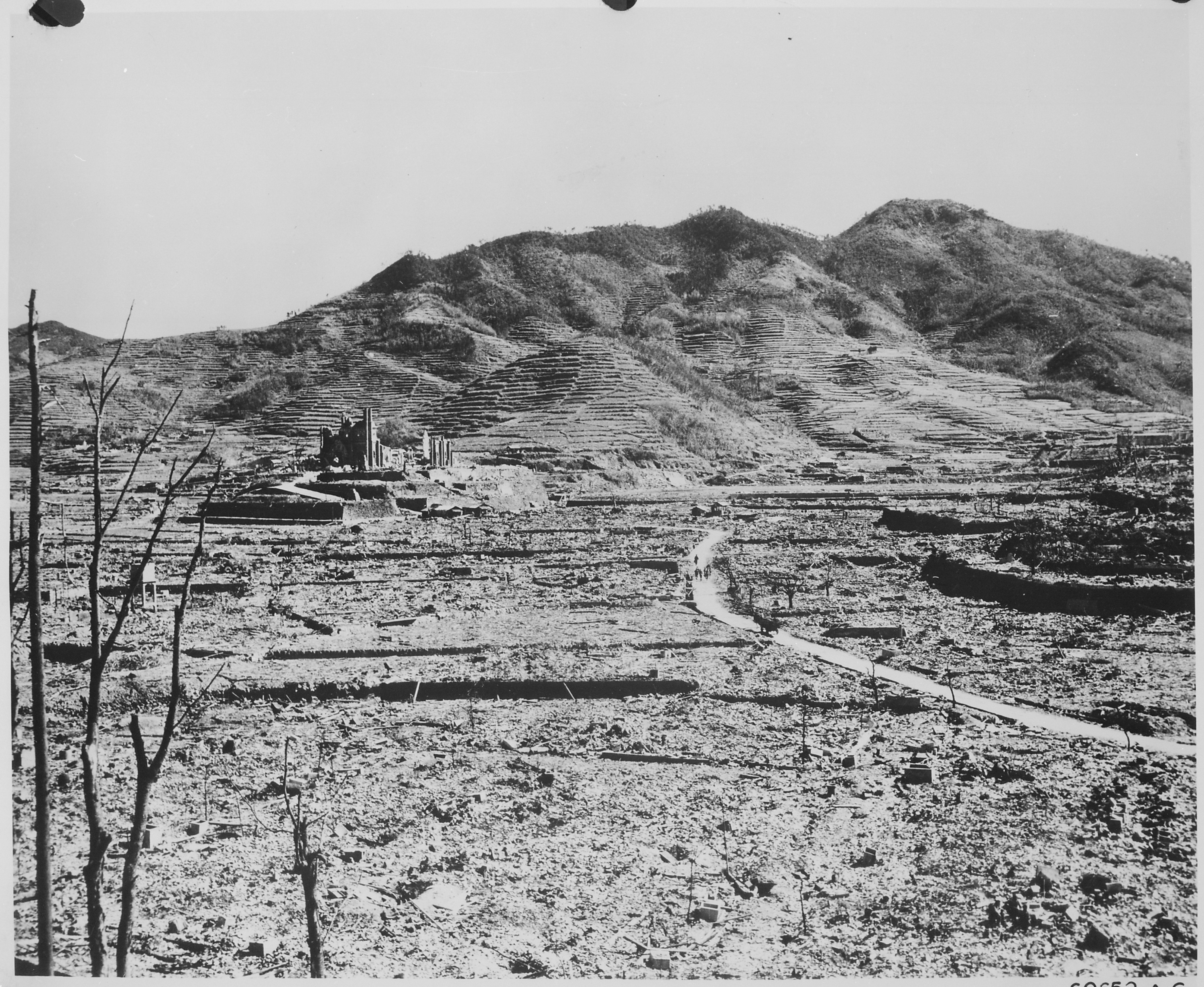
The bomb that killed the most Christians in a single moment in history fell on a city chosen as a backup target.
Six days later, Japan surrendered.
The Reckoning
The war ended. The reckoning began.
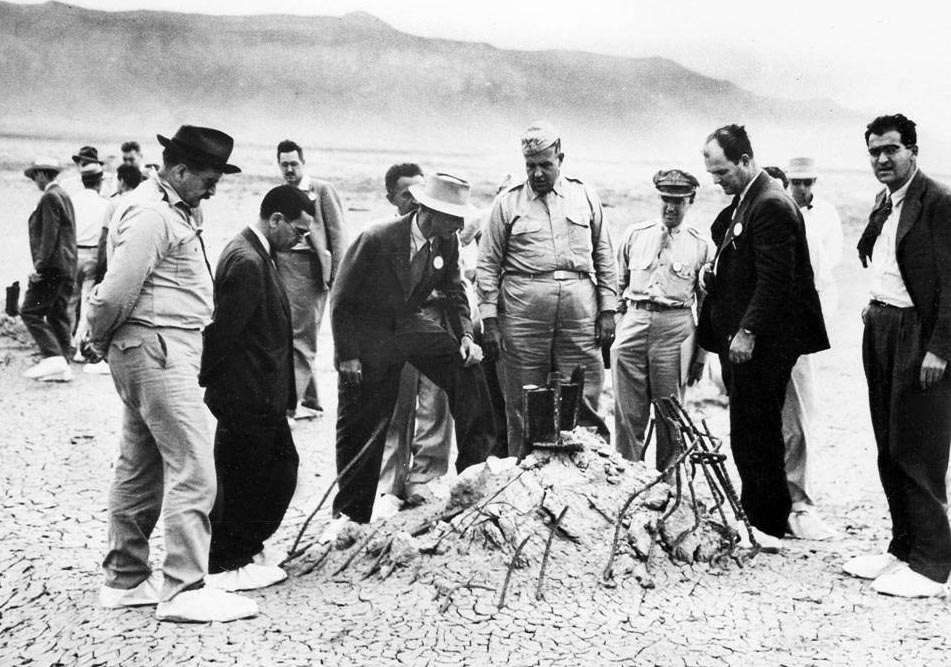

Oppenheimer opposed the hydrogen bomb, a weapon a thousand times more powerful than Hiroshima. In a humiliating security hearing, his clearance was revoked. He was accused of communist sympathies, his opposition to the H-bomb reframed as disloyalty.
“I do not know with what weapons World War III will be fought, but World War IV will be fought with sticks and stones.”
— Albert Einstein

J. Robert Oppenheimer
The Destroyer of Worlds, Destroyed- Directed the most consequential scientific project in history
- Became the face of atomic anxiety
- Stripped of his security clearance in 1954
- Died in 1967, never fully rehabilitated
“We knew the world would not be the same.”
The genie could not be returned to the bottle.
The Inheritance
The scientists who built one bomb had created a world where humanity could destroy itself many times over.
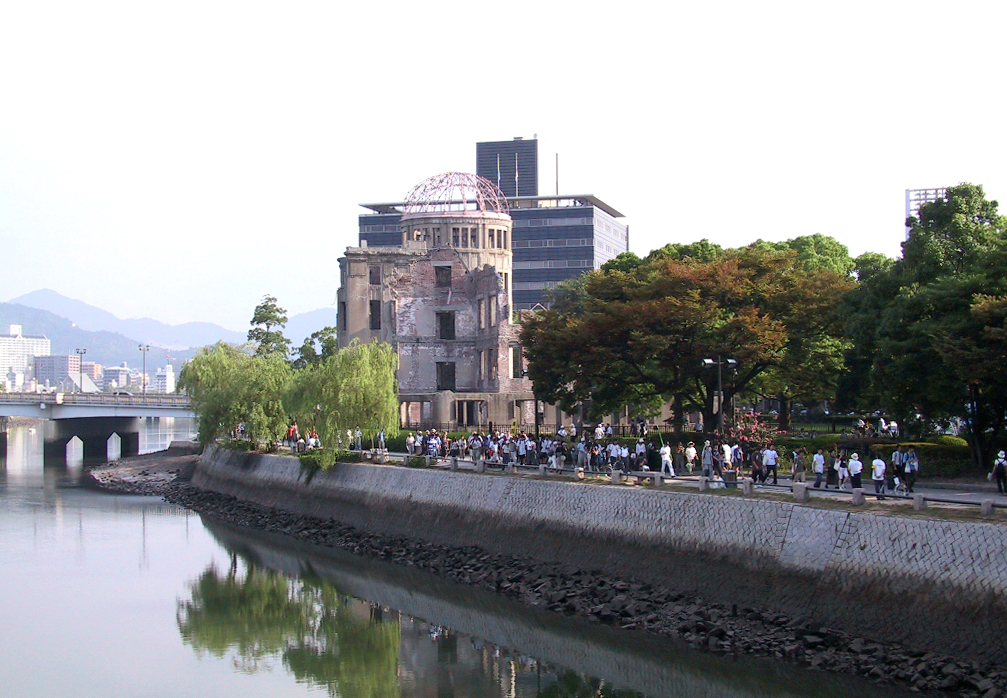
The Manhattan Project proved that humans could unlock the fundamental forces of nature. It left the question of whether we were wise enough to survive our own intelligence.
That question remains open.
Sources & Further Reading
Archives & Primary Sources
- Los Alamos National Laboratory Digital Archives
- National Archives and Records Administration
- Harry S. Truman Library and Museum
- Atomic Heritage Foundation
- Hiroshima Peace Memorial Museum
- Nagasaki Atomic Bomb Museum
Key Works
- Richard Rhodes, "The Making of the Atomic Bomb" (1986)
- Kai Bird & Martin J. Sherwin, "American Prometheus" (2005)
- John Hersey, "Hiroshima" (The New Yorker, 1946)
- Ferenc Morton Szasz, "The Day the Sun Rose Twice" (1984)
Documentary Sources
- "The Day After Trinity" (1981) — Documentary
- "Hiroshima" BBC (2005) — Documentary
- Manhattan Project declassified documents (DOE)
Photography Credits
All photographs sourced from public archives including Los Alamos National Laboratory, National Archives and Records Administration, and the Hiroshima Peace Memorial Museum. Used in accordance with their public domain status or educational fair use provisions.