The Great Fireof London
From Ashes to Empire
When a spark in a bakery consumed medieval London—and gave birth to the modern city
In the depth of night,
a single ember glows.
What follows will consume
an entire civilization.
The Kindling
Pudding Lane, London • September 2, 1666
It began with bread.
Thomas Farriner, the king's baker, retired for the night leaving embers smoldering in his oven. In the cramped, timber-built neighborhood of Pudding Lane, straw and kindling lay everywhere.
At one o'clock in the morning, a spark found fuel.
The Perfect Kindling
Timber Construction
Medieval London was built of wood. Houses leaned over narrow streets, nearly touching.
Drought Conditions
1666 brought an unusually hot, dry summer. Wood was desiccated kindling.
East Wind
Strong easterly winds would push flames west, toward the city's heart.
Official Dismissal
Lord Mayor Bludworth scoffed: "A woman could piss it out."
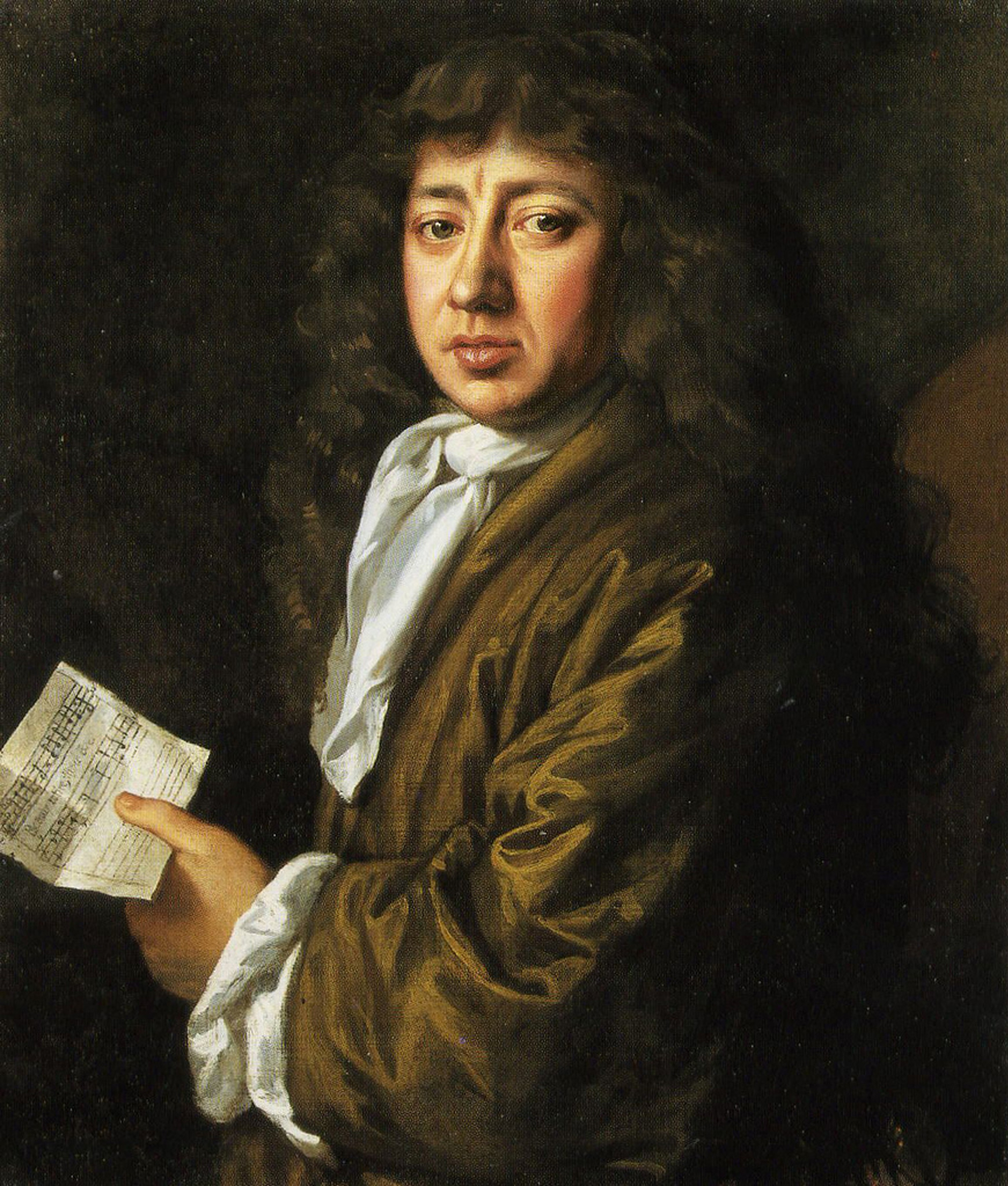 Samuel Pepys by John Hayls, 1666
"Jane called us up about three in the morning, to tell us of a great fire they saw in the City."
— Samuel Pepys, Diary, September 2, 1666
The Inferno
Four Days That Consumed a City
Fire starts in Thomas Farriner's bakery on Pudding Lane
The king's baker forgot to extinguish his oven. Sparks ignite nearby straw and kindling.
Fire spreads to neighboring buildings
Medieval timber-frame houses, packed tightly together, catch flame. The Lord Mayor dismisses it.
300 houses already destroyed
Samuel Pepys climbs the Tower of London to witness the inferno spreading west.
Fire reaches the Royal Exchange and Cheapside
The city's commercial heart burns. Molten lead from church roofs flows through streets.
Old St Paul's Cathedral consumed
The medieval cathedral, wrapped in scaffolding for repairs, explodes into flame.
Fire finally contained
Strong easterly winds die. Firebreaks created by gunpowder finally hold.
Witnesses to the Inferno
"The churches, houses, and all on fire and flaming at once; and a horrid noise the flames made, and the cracking of houses at their ruins."
— Samuel Pepys
"God grant mine eyes may never behold the like, who now saw above 10,000 houses all in one flame; the noise and cracking and thunder of people, the fall of towers, houses, and churches, was like an hideous storm."
— John Evelyn, Diarist
The Devastation
What the Flames Consumed
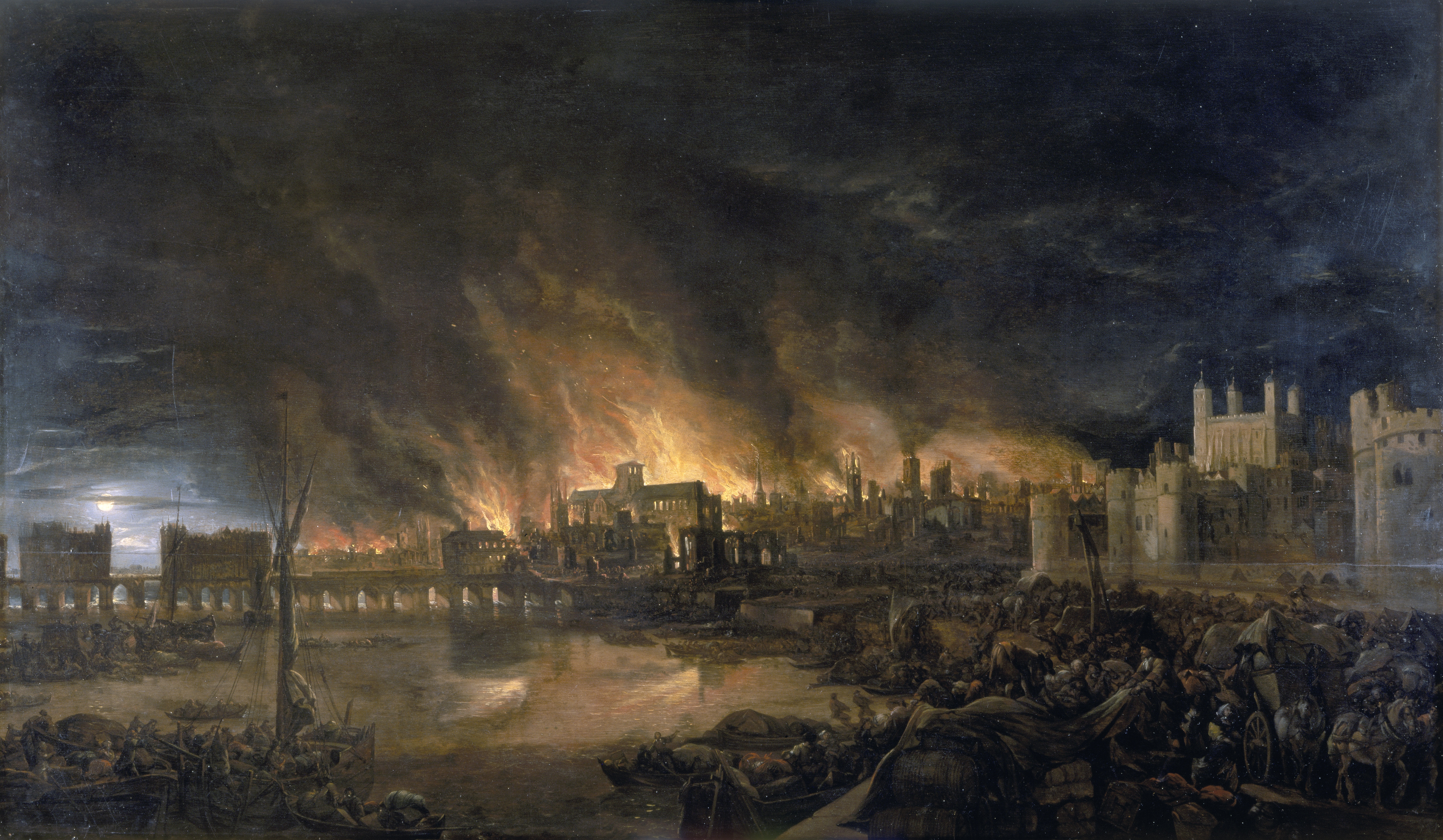
Contemporary Witness
"The Great Fire of London" • Anonymous, c. 1675 • Oil on panel
View from a boat near Tower Wharf, showing Old London Bridge and the city ablaze. Collection of the Museum of London.
The Transformation
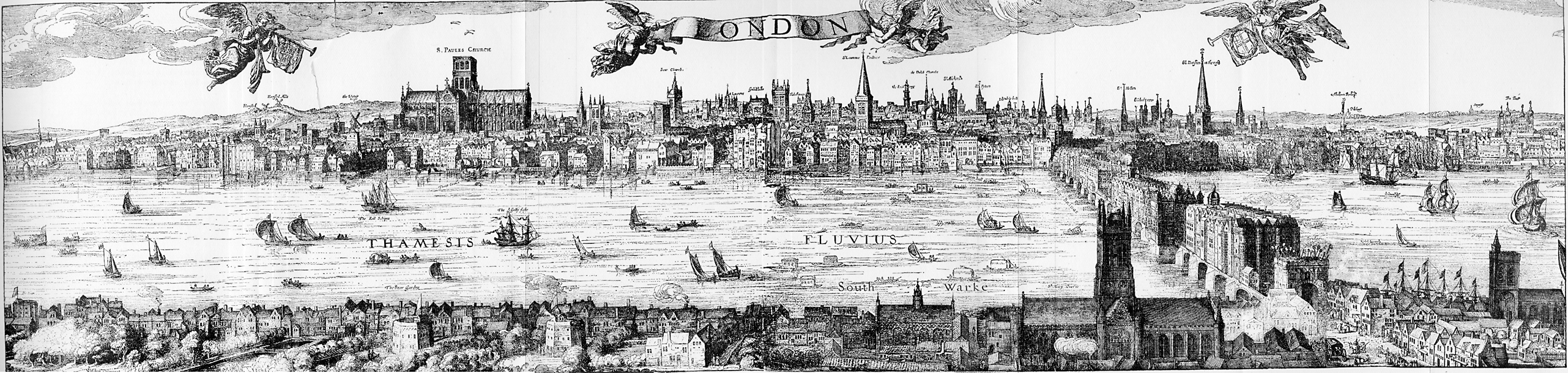
Dense timber buildings, narrow streets, Old St Paul's dominating the skyline
436 acres destroyed, only stone shells and chimneys remaining
Lost Forever
- Old St Paul's Cathedral — The medieval masterpiece, already damaged, exploded as lead roofing melted and stone shattered
- The Guildhall — Seat of city government for 500 years, burned to its stone shell
- 87 Parish Churches — Centuries of worship, art, and community—gone in days
- The Royal Exchange — London's commercial heart, Thomas Gresham's monument
- Newgate Prison — Prisoners fled as walls crumbled
*Official death toll was only 6, but historians believe hundreds—perhaps thousands—of poor and homeless deaths went unrecorded. The true toll remains unknown.
The Phoenix
Christopher Wren and the Rebirth of London
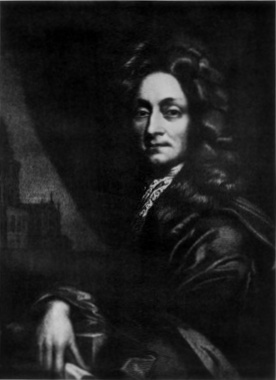 Sir Christopher Wren
From the ashes, a genius emerged.
Christopher Wren, 34 years old, professor of astronomy at Oxford, presented King Charles II with a bold vision just days after the fire: a new London built in stone, with wide boulevards and grand plazas.
The plan was rejected—property rights made it impossible. But Wren would reshape London anyway, one magnificent building at a time.
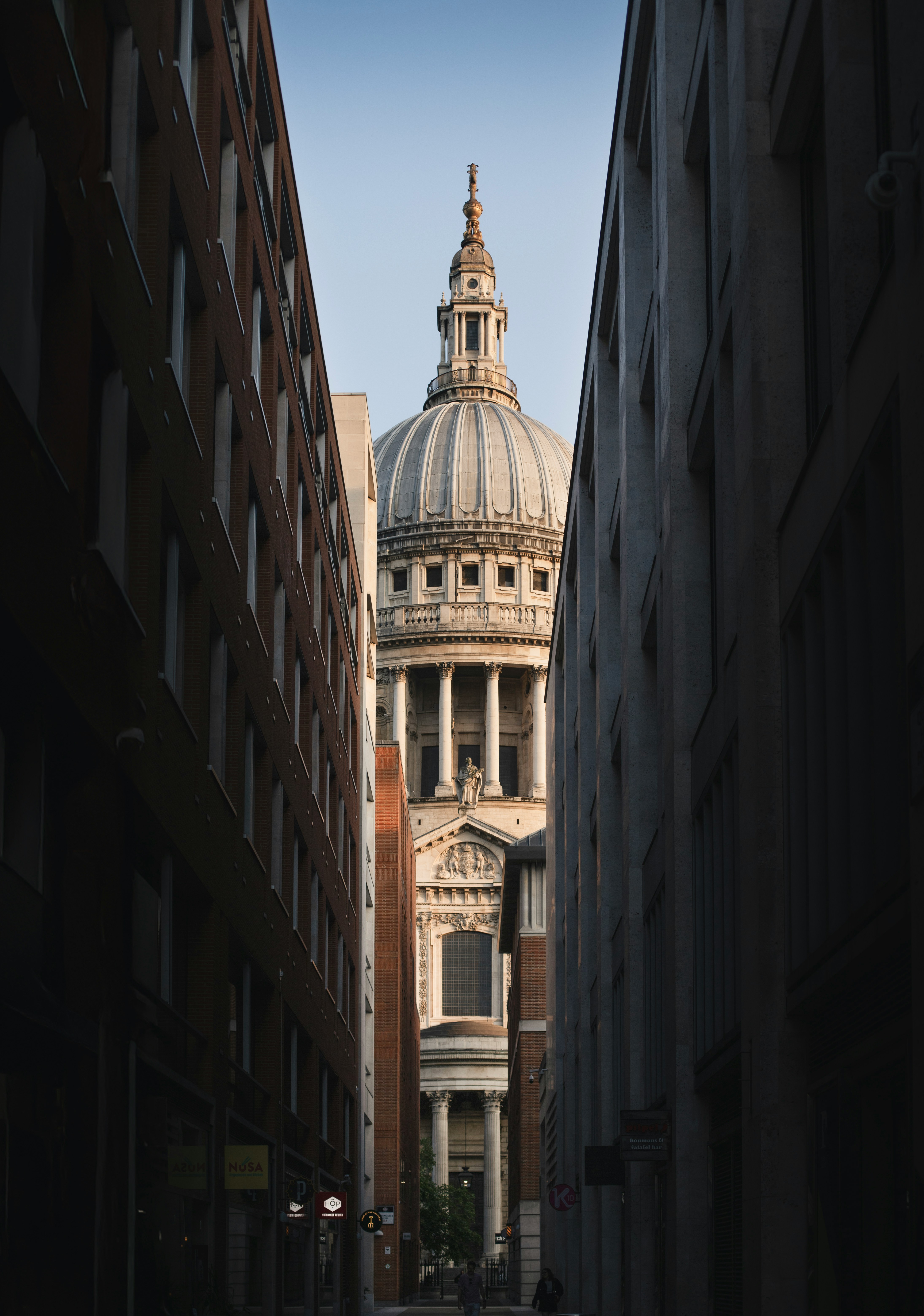 Photo by Lena Polishko / Unsplash
St Paul's Cathedral
Wren's Masterpiece • 1675-1710
Rising 365 feet from the rubble of Old St Paul's, Wren's cathedral married English baroque with classical elegance. Its dome—inspired by St Peter's in Rome—became the symbol of London's resurrection.
Wren's London
St Paul's Cathedral
35 years to build the masterpiece that defines London's skyline
51 City Churches
Each unique, each a baroque gem rising from medieval ashes
Monument to the Fire
202 feet tall—the exact distance from Pudding Lane
Royal Exchange
Commerce reborn in stone and classical columns
"Si monumentum requiris, circumspice."
"If you seek his monument, look around you."
— Inscription in St Paul's Cathedral, marking Wren's tomb
Eternal Flame
The Fire's Lasting Legacy
Building Codes Revolution
The Rebuilding Act of 1667 mandated brick and stone construction, wider streets, and fire-resistant design—the world's first modern building codes.
Fire Insurance & Brigades
Nicholas Barbon founded the first fire insurance company in 1680. Insurance companies created their own fire brigades—the ancestors of modern fire departments.
English Baroque
Wren and his successors created a distinctly English architectural style that influenced buildings worldwide, from American colonial architecture to modern civic design.
Urban Planning
Though Wren's grand plan wasn't implemented, the fire demonstrated the need for planned urban development—a principle that shapes cities to this day.
The Monument
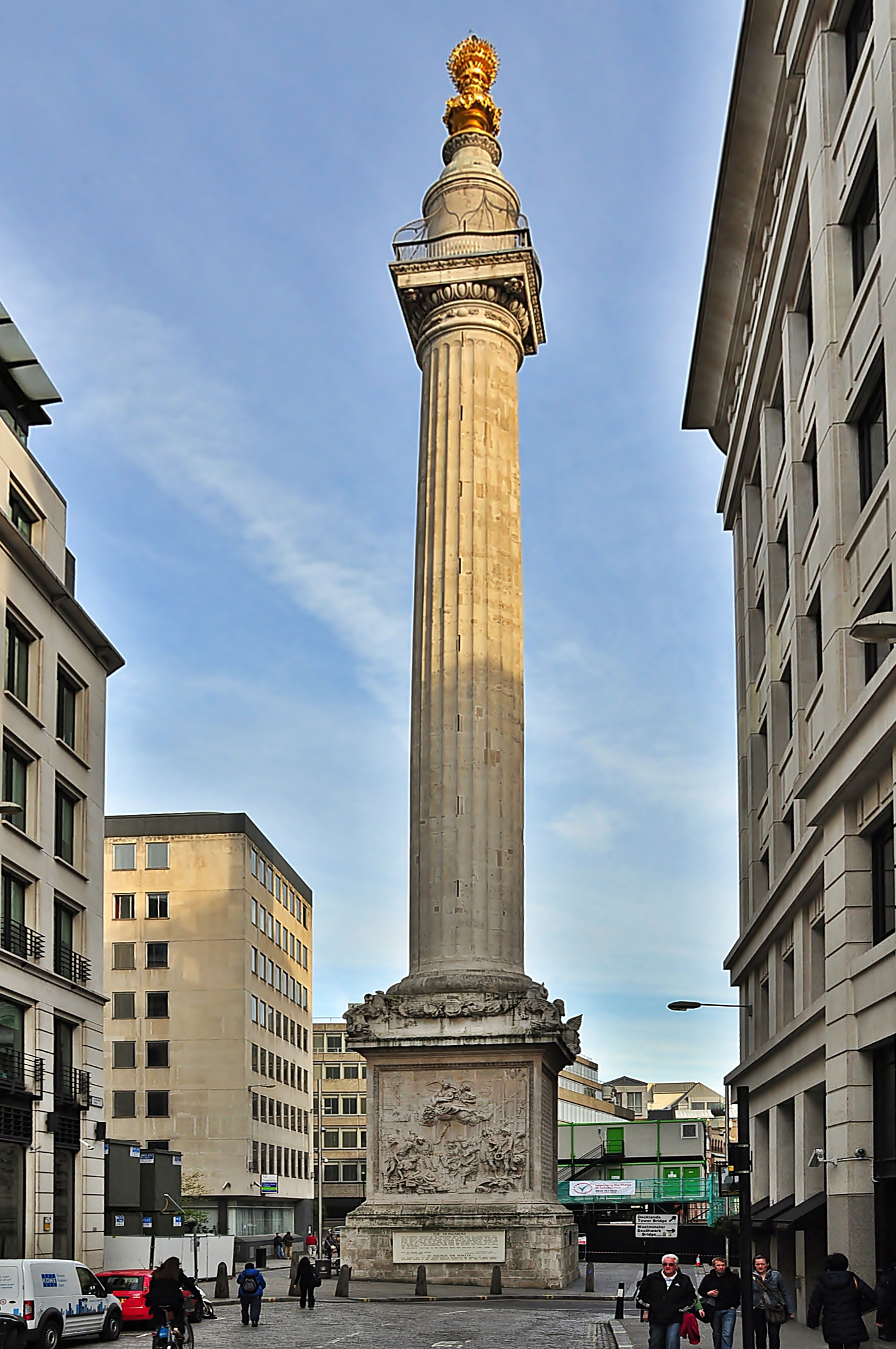 Photo: Wikimedia Commons / CC BY-SA 3.0
Standing 202 feet tall—the exact distance from Pudding Lane—the Monument is crowned with a gilded urn of flames. Climb its 311 steps for views across the city that rose from the ashes.
From catastrophe, transformation.
The Great Fire destroyed medieval London, but it gave birth to the modern city. In four days of destruction, London gained centuries of progress: building codes, fire safety, urban planning, and architectural wonders that still define its skyline.
Every city that prevents fires owes a debt to the flames of 1666.
"London rises again, whether from its domestic ashes, or the spoils of foreign enemies, made more illustrious by its calamities."
— John Evelyn, writing to Samuel Pepys, 1666
Sources & Further Reading
Primary Sources
- Samuel Pepys — The Diary of Samuel Pepys (1666)Eyewitness account of the fire's progress day by day
- John Evelyn — Diary (1666)Another contemporary witness and future advisor on rebuilding
- London Gazette — Issues of September 3-10, 1666Official government accounts during and after the fire
Historical Studies
- Adrian Tinniswood — By Permission of Heaven: The True Story of the Great Fire of London (2003)
- Neil Hanson — The Great Fire of London: In That Apocalyptic Year, 1666 (2001)
- Stephen Porter — The Great Fire of London (1996)
Christopher Wren
- Lisa Jardine — On a Grander Scale: The Outstanding Life of Sir Christopher Wren (2002)
- Kerry Downes — Christopher Wren (1971)
- Museum of London — Fire! Fire! Exhibition Archives
Online Resources
Image Credits
- "The Great Fire of London" — Anonymous, c. 1675, oil on panelMuseum of London (Accession #000793). Public domain. Wikimedia Commons
- Panorama of London (1616) — Claes VisscherPre-fire London showing Old St Paul's and medieval cityscape. Public domain. Wikimedia Commons
- "London After the Fire" — Wenceslaus Hollar, 1666, etchingView of London ruins looking from Southwark. Public domain. Wikimedia Commons
- Portrait of Samuel Pepys — John Hayls, 1666, oil on canvasNational Portrait Gallery, London. Public domain. Wikimedia Commons
- Portrait of Sir Christopher Wren — After Sir Godfrey KnellerPublic domain. Wikimedia Commons
- St Paul's Cathedral Dome — Lena PolishkoUnsplash License (free for all uses). Unsplash
- The Monument to the Great Fire of LondonCC BY-SA 3.0. Wikimedia Commons