
George Orwell
Every line of serious work that I have written since 1936 has been written, directly or indirectly, against totalitarianism.
Why I Write, 1946
Two men imagined the end of freedom
The Prophets Who Saw Our Future
Which future did we get?
Our Present Moment
You check your phone dozens of times a day. Each time, something watches you — camera, microphone, location, biometrics. Each time, something entertains you — notifications, content, connection, infinite scroll.
The device in your pocket is both telescreen and soma. It surveils while it satisfies. It tracks while it entertains.
Two writers, working seventeen years apart, each imagined a future where humanity loses its freedom. One feared we would be crushed by external oppression. The other feared we would not need to be oppressed — we would come to love our servitude.
Parallel Lives, 1894–1946
Every line of serious work that I have written since 1936 has been written, directly or indirectly, against totalitarianism.
Why I Write, 1946
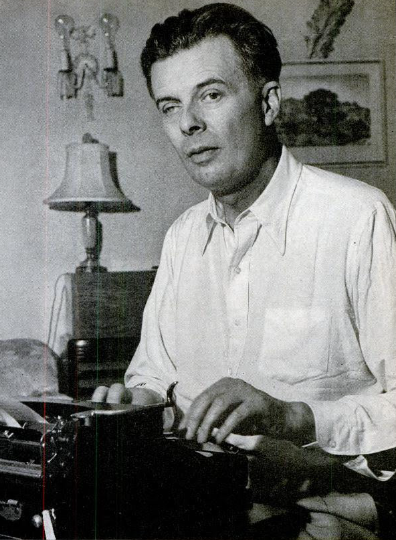
A really efficient totalitarian state would be one in which the all-powerful executive of political bosses and their army of managers control a population of slaves who do not have to be coerced, because they love their servitude.
Brave New World, Foreword, 1946
Born in 1903 in colonial India, the man who would become George Orwell served as an Imperial Police officer in Burma, where he witnessed the brutality of colonial power firsthand. He fought fascism in the Spanish Civil War and was shot through the throat — a wound that nearly killed him. He worked for the BBC during WWII, producing propaganda he found distasteful, gaining intimate knowledge of how official truth is manufactured.
Orwell's path: Imperialism → Fascism → Propaganda → Fear of the State
Born in 1894 into England's intellectual aristocracy — grandson of Thomas Henry Huxley, "Darwin's Bulldog" — Aldous Huxley grew up steeped in scientific rationalism and literary privilege. At sixteen, an eye disease left him nearly blind for eighteen months, forcing him to develop extraordinary inner perception. He observed 1920s consumerism from his privileged vantage, then moved to California in 1937, where he watched Hollywood manufacture desire.
Huxley's path: Privilege → Blindness → Consumerism → Fear of Ourselves
The Worlds They Built
You obey because the consequences of disobedience are unbearable. The boot on the face, forever.
You obey because you love your servitude. Why rebel against what feels so good?
If you want a picture of the future, imagine a boot stamping on a human face — forever.
October 21, 1949
Three months before George Orwell would die of tuberculosis at age 46, Aldous Huxley — seventeen years his senior, once briefly his teacher at Eton — wrote him a letter. He had just finished reading Nineteen Eighty-Four.
Dear Mr. Orwell,
Three months later, George Orwell was dead.
Huxley admired the novel profoundly. But he believed his own vision would prove more accurate — not because Orwell was wrong about tyranny's appeal, but because a subtler mechanism of control would prove more efficient.
The boot can be resisted. But what do you resist when you love your chains?
Two Methods of Killing Reality
The Ministry of Truth rewrites history daily. Inconvenient documents vanish down the memory hole. The Party slogan: "Who controls the past controls the future." Newspeak systematically eliminates words for unapproved concepts.
Result: The truth is whatever the Party says it is, moment to moment.
"History is bunk." Why bother controlling the past when no one cares about it? Conditioning means no one questions. So much entertainment — who has time for truth? The past simply doesn't matter.
Result: Truth is irrelevant when pleasure is all that matters.
Orwell feared that the truth would be concealed from us. Huxley feared the truth would be drowned in a sea of irrelevance.
Bodies as Instruments of Control
The Anti-Sex League promotes "goodsex" — reproduction only, no pleasure. Winston and Julia's affair is political rebellion. Physical desire itself is dangerous because it creates private loyalty outside the Party.
They are captured. Tortured. "I betrayed you." "I betrayed you." They no longer love.
"Everyone belongs to everyone else." Exclusive relationships are scandalous. Sex is constant, meaningless, recreational. Children are raised communally, decanted in bottles. No family, no private loyalty.
They don't know how to love. Connection is impossible when attachment is prohibited.
Same outcome: No one loves deeply enough to rebel for anyone.
But I don't want comfort. I want God, I want poetry, I want real danger, I want freedom, I want goodness. I want sin.
We Got Both
The Smartphone
It watches you: camera, microphone, location, biometrics, browsing history.
It entertains you: apps, games, content, social connection, infinite scroll.
You carry it voluntarily. You check it compulsively.
Big Brother and soma. In one device. In your pocket.
Orwell warns that we will be overcome by an externally imposed oppression. But in Huxley's vision, no Big Brother is required to deprive people of their autonomy, maturity and history. As he saw it, people will come to love their oppression, to adore the technologies that undo their capacities to think.
The binary was always false. We are surveilled while we are entertained. Tracked while we are gratified. Both mechanisms operate simultaneously, often through the same technologies.
Would Orwell feel vindicated by surveillance states, facial recognition, the manipulation of truth? Would he be horrified that we carry telescreens voluntarily?
Would Huxley feel vindicated by pharmaceutical billions, attention economies, populations scrolling toward oblivion? Would he be surprised that surveillance coexists with pleasure?
Neither author offered clear solutions. Both were diagnosticians, not healers.
When you unlock your phone, are you being watched or entertained?
Are you choosing, or are you conditioned to choose?
Is this fear, or is this pleasure?
And if it is both — what does that mean for how you live?
This essay was fact-checked against primary sources, scholarly biographies, and authoritative historical records. All quotes are verified from original texts and correspondence.